Q What is the difference between black-painted cedar boards and Yakisugi “Gen”?
Black-painted cedar boards and Yakisugi “Gen” may appear similar at first glance, but there are clear differences in texture and surface expression.
When black paint is applied directly to ordinary cedar boards, the surface is relatively smooth. As a result, the natural grain texture and shadowing tend to be less pronounced, giving the overall appearance a flatter impression.
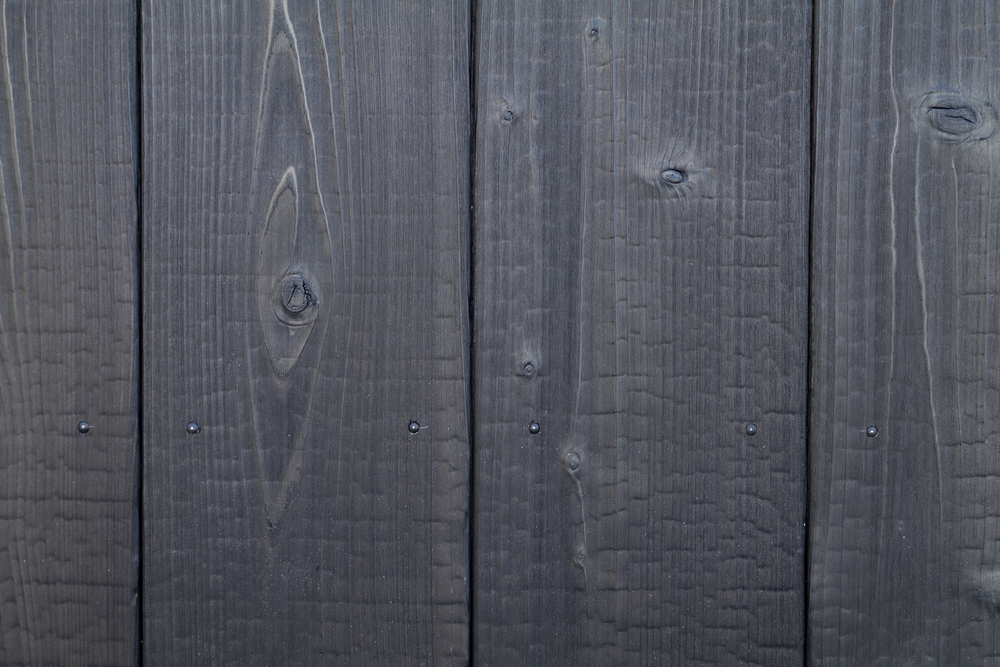
In contrast, Yakisugi “Gen” is produced by first charring the cedar boards and then removing the charred layer before applying the paint.
This process leaves the distinctive grain texture created by charring as the base, allowing the wood grain to appear more three-dimensional, with a sense of depth and subtle variation.
The textured surface also improves paint adhesion, resulting in a matte, subdued finish.
Durability varies depending on the installation environment, but as a general guideline, the appearance of Yakisugi “Gen” can be maintained with repainting approximately once every ten years.
Related Questions
- Q What kind of cedar boards are used for Yakisugi?
- Q How was Yakisugi “Misugi” developed?
- Q How was Yakisugi “Gen” developed?
- Q What is the difference between the Triangle Charring Method and the Machine Charring Method used for Yakisugi?
- Q Are there any precautions when using Yakisugi in areas with heavy snowfall?
- Q What should be noted when installing Yakisugi?
- Q What led Kyoei Lumber to begin producing Yakisugi, and how has the business developed over time?
- Q What is Yakisugi? How is it different from ordinary cedar boards?